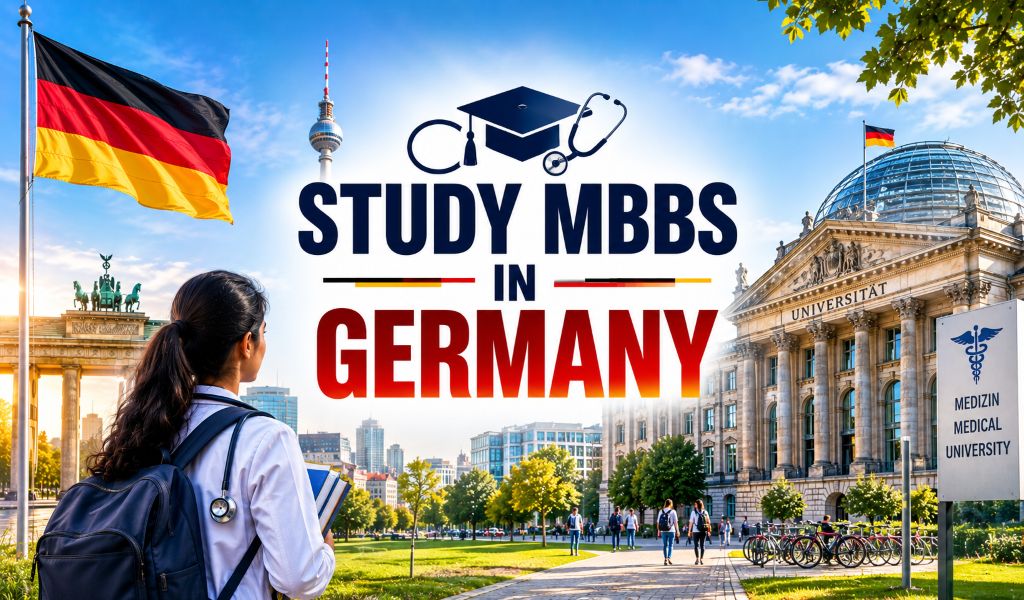
Study MBBS in Germany
Table of Contents
- Education System: Study MBBS in Germany
- Study MBBS in Germany: MBBS vs Staatsexamen Explained
- Top Universities to Study MBBS in Germany
- Cost to Study MBBS in Germany for Indian Students
- Scholarships to Study MBBS in Germany
- Eligibility to Study MBBS in Germany
- Entrance Exams and Other Admission Requirements
- How Can I Study MBBS in Germany? : Application Process
- Career Opportunities After You Study MBBS in Germany
- Author's Final Thoughts
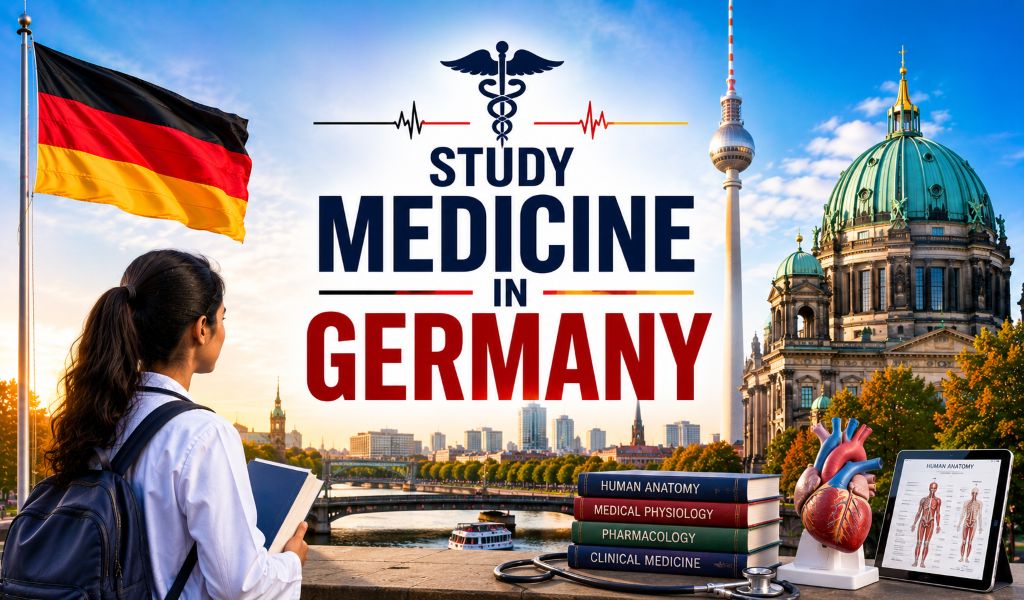
Germany is the perfect destination for Indian students aspiring for a medical career. Study MBBS in Germany, to receive internationally recognized medical education, advanced clinical exposure and access to one of Europe's strongest healthcare systems. Unlike countries where medical education can cover cost of up to ₹50–80 lakh, most German public universities charge no tuition fees, requiring students to pay only a semester contribution of approximately €200–€350 (Approx. ₹20,000–₹35,000).
Germany awards the Staatsexamen instead of a conventional MBBS degree and admission is highly competitive. Indian students must fulfil multiple requirements, including qualifying NEET, obtaining APS Certificate, completing Studienkolleg (where applicable) and demonstrating German language proficiency up to B2/C1 level.
Key Highlights
Particular | Details |
Degree Awarded | Staatsexamen (Medical State Examination) |
Course Duration | 6–6.5 years |
Tuition Fees | Mostly tuition-free at public universities |
Semester Contribution | €200–€350 (Approx. ₹20,000–₹35,000) |
Medium of Instruction | German |
German Language Requirement | B2 for Studienkolleg, C1/TestDaF or DSH for medical university |
NEET Requirement | Mandatory for Indian students |
APS Certificate | Mandatory |
Studienkolleg | Required for most Indian Class 12 graduates |
Student Visa | German National Student Visa |
Blocked Account Requirement | Approximately €11,904–€12,300 (Approx. ₹11.9–₹12.3 lakh) annually |
Part-time Work | 140 full days or 280 half days annually |
Medical License | Approbation after passing Staatsexamen |
This guide explains everything from the German medical education system and admission process to the cost of studying MBBS in Germany for Indian students, scholarships, career opportunities and salaries, so you can confidently plan your journey.
Education System: Study MBBS in Germany
Germany follows a structured medical education system regulated by federal government. Instead of awarding a Bachelor of Medicine, students complete the Staatsexamen, a nationally recognized qualification that leads to professional medical licensure (Approbation).
Duration and Course Structure
MBBS in Germany takes up to 6 years to complete, it combines classroom teaching, laboratory work, hospital rotations and supervised clinical training over approximately six years. Germany integrates practical training throughout the curriculum, ensuring graduates are clinically competent before independent practice.
The table below explains each stage of the programme.
Stage | Duration | Key Learning Outcomes |
Pre-clinical Studies | 2 years | Anatomy, physiology, biochemistry, pathology |
Physikum Examination | After Year 2 | First State Examination |
Clinical Studies | 3 years | Internal medicine, surgery, paediatrics, psychiatry, pharmacology |
Practical Year (PJ) | 1 year | Full-time hospital training |
Staatsexamen | Final examination | Medical licensing examination |
Approbation | After passing | Official licence to practise medicine in Germany |
Study MBBS in Germany: MBBS vs Staatsexamen Explained
Germany awards the Staatsexamen, which is legally recognized across Germany for medical practice. Although the learning outcomes are similar to a general MBBA, the qualification structure differs considerably.
The comparison below highlights the major differences.
MBBS in India | Staatsexamen in Germany |
MBBS Degree | State Medical Examination |
Mostly English | Entirely German |
University awards degree | Federal medical qualification |
Internship after course | Practical Year integrated |
Indian Medical Registration | German Approbation |
For Indian students planning to study MBBS in Germany, understanding this distinction is essential because licensing and recognition follow different procedures.
Top Universities to Study MBBS in Germany
Germany is home to internationally recognized medical universities offering excellent research facilities, clinical exposure and modern teaching hospitals. Since most are publicly funded, students benefit from world-class education while paying only semester contributions.
The universities below are among the most preferred institutions for Indian students.
University | QS World Ranking'27 | Semester Contribution |
Heidelberg University | 86 | €170–€200 (Approx. ₹17,000–₹20,000) |
LMU Munich | 61 | €150–€200 (Approx. ₹15,000–₹20,000) |
Charité – Universitätsmedizin Berlin | 18 (in medicine) | €300 (Approx. ₹30,000) |
RWTH Aachen University | 104 | €320 (Approx. ₹32,000) |
University of Tübingen | 230 | €170 (Approx. ₹17,000) |
University of Freiburg | 245 | €180 (Approx. ₹18,000) |
Cost to Study MBBS in Germany for Indian Students
The strongest reasons Indian students choose Germany is it's affordability. Although tuition at public universities is almost free, students must budget carefully for semester contributions, accommodation, food, health insurance, visa requirements and daily living expenses. The following highlights the cost of studying MBBS in Germany for Indian students:
Tuition Fees by University Category
German universities cater to students with different budgets. While public institutions remain highly affordable, a few private medical institutions charge significantly higher tuition.
The table below compares approx. tuition costs:
University Category | Tuition Fees |
Public Universities | Tuition-free |
Semester Contribution | €200–€350 (Approx. ₹20,000–₹35,000) |
Baden-Württemberg Public Universities (Non-EU) | €1,500/semester (Approx. ₹1.5 lakh) |
Private Medical Universities | €10,000–€28,000 annually (Approx. ₹10–₹28 lakh) |
Living Cost While Studying MBBS in Germany
Living expenses account for most of your annual budget. Students should plan accommodation, insurance, transport and food expenses before applying.
The following table provides average monthly expenses.
Expense | Approx. Monthly Cost |
Accommodation | €350–€600 (Approx. ₹35,000–₹60,000) |
Food | €180–€250 (Approx. ₹18,000–₹25,000) |
Health Insurance | €140 (Approx. ₹14,000) |
Transportation | Included in many semester tickets |
Utilities & Internet | €80–€120 (Approx. ₹8,000–₹12,000) |
Personal Expenses | €120–€180 (Approx. ₹12,000–₹18,000) |
Overall monthly expenses can range between €900–€1,100 (Approx. ₹90,000–₹1.1 lakh) depending on the city.
Scholarships to Study MBBS in Germany
Scholarships significantly reduce living expenses, health insurance costs, travel expenses and research-related expenditure. Indian students planning to study MBBS in Germany should apply early for most scholarships have strict deadlines and limited seats.
Government Scholarships
Several prestigious government-funded scholarships for international students. While some focus on postgraduate programmes, a few funding schemes and stipends can support medical students during their academic journey.
The table below highlights the major options.
Scholarship | Benefits |
DAAD Scholarships* | Monthly stipend, health insurance, travel allowance (primarily postgraduate programmes) |
Deutschlandstipendium | €300/month (Approx. ₹30,000/month) based on merit |
Erasmus+ Mobility Grants | Exchange semester funding for eligible medical students |
DAAD Short-Term Research Grants | Research funding for advanced medical studies |
Indian Scholarships
Apart from German funding, several Indian organisations support students pursuing higher education abroad.
The table below highlights scholarships Indian students should consider.
Scholarship | Benefits |
JN Tata Endowment | Loan scholarship for higher education abroad |
KC Mahindra Scholarships | Interest-free scholarship loans |
Inlaks Shivdasani Foundation | Funding for selected international programmes |
Narotam Sekhsaria Scholarship | Interest-free education scholarship |
Aga Khan Foundation | Need-based funding for eligible candidates |
Eligibility to Study MBBS in Germany
Understanding the eligibility to study MBBS in Germany is an important steps before beginning your application. Germany follows stricter admission standards than many countries, Indian students must satisfy academic, language and examination requirements before receiving admission.
Academic Eligibility
Your academic profile plays the biggest role during admissions.
The table below summarises the minimum academic expectations.
Requirement | Details |
Class 12 | PCB with strong academic performance |
Recommended Percentage | Usually 85–90%+ |
NEET Qualification | Mandatory for Indian students |
APS Certificate | Mandatory |
Studienkolleg | Required for most Indian students entering after Class 12 |
University Qualification | Equivalent German HZB after Studienkolleg |
Students with exceptionally strong academic records have a better chance of securing admission as medical seats are highly competitive.
German Language Requirements
Medicine in Germany is almost entirely taught in German. Strong communication skills are essential because students interact with patients throughout their education.
The table below explains the language requirements.
Level | Purpose |
B1 | Recommended before applying |
B2 | Required for Studienkolleg admission |
C1 | Required for medical university admission |
TestDaF Level 4 | Widely accepted |
DSH-2 / DSH-3 | Accepted by most universities |
Goethe-Zertifikat C1 | Accepted by many institutions |
Entrance Exams and Other Admission Requirements
Besides academic scores, several examinations and document verification processes are mandatory for Indian applicants.
The following table summarises these requirements.
Requirement | Purpose |
NEET | Mandatory for Indian students |
TestAS | Required by some universities |
Aufnahmeprüfung | Studienkolleg entrance examination |
Feststellungsprüfung (FSP) | Qualification examination after Studienkolleg |
APS Certificate | Academic document verification |
Medical Fitness Certificate | Required for visa and university documentation |
Completing these requirements well before application deadlines will make the admission process much smoother.
How Can I Study MBBS in Germany? : Application Process
Many students wonder "how can I study MBBS in Germany" after Class 12. The answer lies in careful planning rather than last-minute applications. Since several steps from language learning to APS verification take months, beginning your preparation at least one year in advance is highly recommended.
The table below outlines the complete application journey.
Step | Action |
1 | Qualify NEET |
2 | Learn German (B1 → B2 → C1) |
3 | Obtain APS Certificate |
4 | Apply for Studienkolleg (if required) |
5 | Pass Aufnahmeprüfung & FSP |
6 | Apply through Uni-Assist or university portal |
7 | Receive admission offer |
8 | Arrange blocked account |
9 | Apply for German student visa |
10 | Travel to Germany and enrol |
Student Visa Process
Obtaining German student visa becomes the next crucial step, after receiving admission. Your application must demonstrate both financial capability and genuine study intent.
The table below summarises the required documents.
Requirement | Details |
Admission Letter | From recognised German university |
APS Certificate | Mandatory for Indian students |
Blocked Account | Approximately €11,904–€12,300 (Approx. ₹11.9–₹12.3 lakh) |
Health Insurance | Mandatory |
Passport | Valid throughout study period |
Visa Fee | Approximately €75 (Approx. ₹7,500) |
Proof of Accommodation | Recommended |
Visa processing takes between 4–12 weeks, depending on the embassy and application volume.
Career Opportunities After You Study MBBS in Germany
Medical education in Germany opens opportunities not only within Germany but also across Europe. Since Germany has high demand for qualified healthcare professionals, medical graduates enjoy excellent employability and long-term career stability.
Salary After Studying MBBS in Germany
Medical salaries increase steadily with experience, residency and specialization.
The table below presents approximate annual earnings.
Position | Average Annual Salary |
Resident Doctor | €60,000–€75,000 (Approx. ₹60–₹75 lakh) |
Specialist Doctor | €80,000–€120,000 (Approx. ₹80 lakh–₹1.2 crore) |
Consultant | €120,000–€200,000 (Approx. ₹1.2–₹2 crore) |
Senior Consultant | €200,000+ (Approx. ₹2 crore+) |
Note: The figures vary depending on hospital type, city and medical speciality.
Career Options After Graduation
Graduates can pursue multiple professional pathways depending on their interests and qualifications.
The table below highlights popular options.
Career Path | Description |
Clinical Practice | Hospitals and healthcare centres |
Medical Specialisation | Surgery, Cardiology, Neurology, etc. |
Medical Research | Universities and research institutes |
Public Health | Government healthcare organisations |
Medical Academia | Teaching and research positions |
Pharmaceutical Industry | Clinical research and regulatory affairs |
Medical professionals also benefit from Germany's clear pathway to long-term residence and eventual permanent residency after employment.
Author's Final Thoughts
If your dream is to become a doctor through a globally respected education system without high tuition fees, Germany deserves serious consideration. Although, choosing to study MBBS in Germany isn't simply about saving money, it requires dedication, long-term planning and commitment to mastering the German language. Students who underestimate the language requirement often struggle, regardless of their academic performance.
My advice to every Indian student is to begin preparing early. Qualify NEET, start learning German as soon as possible, secure your APS Certificate well in advance and understand every admission requirement before applying. Germany rewards students who prepare thoroughly.
If you need further assistance, get on 1:1 counselling session and get your academic profile evaluated by our experienced study abroad counsellors who can guide you through university selection, APS documentation, language preparation, scholarships, visa requirements and every step of your journey.