
MSc Forensic Science in Germany 2026
Table of Contents
- MSc Forensic Science in Germany Top Universities with QS Rankings
- Course Structure of MSc Forensic Science in Germany
- MSc Forensic Science in Germany Eligibility and Admission Requirements
- MSc Forensic Science in Germany Specializations and Study Areas
- MSc Forensic Science in Germany Scholarship Opportunities
- MSc Forensic Science in Germany Tuition Fees and Living Costs
- MSc Forensic Science in Germany Application Process for International Students
- MSc Forensic Science in Germany Career Opportunities and Salaries
- MSc Forensic Science in Germany Top Industries and Recruiters
- Conclusion
MSc Forensic Science in Germany provides advanced, science-focused education in areas such as DNA analysis, toxicology, and digital forensics. The programs are designed to offer strong practical and research-based training, preparing students for real-world investigative roles in modern forensic science.
Most public universities in Germany charge no tuition fees, making it a highly affordable option for international students. Admission usually requires a relevant bachelor’s degree, English or German language proficiency, and in some cases, prior academic or professional experience in related fields.
Key highlights :
Key Aspect | Details |
Program Focus | Forensic science training in DNA analysis toxicology and digital forensics |
Study Destination | Germany with strong research universities |
Tuition Fees | Mostly free in public universities with a small semester fee |
Admission | Bachelor degree and language proficiency required |
Specializations | Biology chemistry psychology and cybercrime |
Scholarships | DAAD Erasmus and university funding options |
Career Scope | Jobs in labs law enforcement and cybersecurity |
Salary Range | €35,000 to €85,000 per year (approx. ₹31 lakh to ₹76 lakh) |
This pagecovers MSc Forensic Science in Germany, including universities, eligibility, fees, scholarships, and career opportunities. It also highlights salaries, top recruiters, and future scope for international students.
MSc Forensic Science in Germany Top Universities with QS Rankings
Germany has several globally ranked universities offering strong education and research opportunities in forensic science and related fields. These universities are known for advanced laboratory facilities, interdisciplinary learning, and strong academic reputation across Europe. QS World University Rankings 2026 reflects their global standing in higher education.
The table below highlights top universities for MSc Forensic Science in Germany along with their QS World University Rankings and key strengths:
University | QS World Ranking 2026 | Key Highlights |
Heidelberg University | #80 | Strong global research reputation and PhD opportunities |
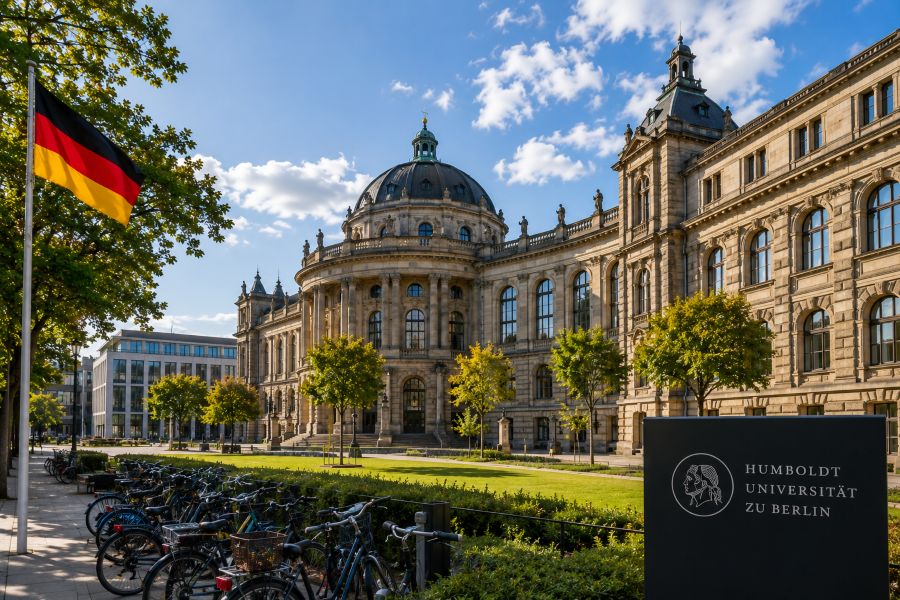
Humboldt University of Berlin | #130 | Interdisciplinary learning with strong academic reputation |
University of Hamburg | #193 | Strong focus on digital and behavioral forensics |
University of Bonn | #207 | Research focused with strong laboratory training |
University of Tübingen | #213 | Excellence in life sciences and forensic research |
Fresenius University of Applied Sciences | Not ranked in QS Global Top List | Industry oriented applied forensic training |
Course Structure of MSc Forensic Science in Germany
The MSc Forensic Science in Germany is structured to build strong scientific knowledge along with practical investigative skills. The program combines classroom learning, laboratory training, and research work to prepare students for real-world forensic careers. It also includes modern areas like digital forensics and data-driven investigation methods.
Most universities follow a semester-based structure with core subjects, electives, practical labs, and a final thesis. This ensures both academic depth and industry-relevant training.
Course Structure :
Semester 1: Foundation Modules
Basics of forensic science, criminal law fundamentals, forensic biology, and chemistry introduction.
Semester 2: Core Forensic Science Studies
Advanced forensic chemistry, DNA analysis, toxicology, and crime scene investigation techniques.
Semester 3: Specialization and Advanced Topics
Cyber forensics, digital evidence handling, forensic psychology, and applied forensic methods.
Semester 4: Research and Final Thesis
Independent research project, dissertation writing, and optional internship or lab-based practical work.
2.Practical Training and Laboratory Work
Students gain hands-on experience through laboratory experiments, case simulations, and forensic analysis techniques using modern equipment. This helps build real investigative skills required in professional forensic environments.
3. Internship and Industry Exposure
Many programs include internships in forensic labs, police departments, or research institutions. This provides real-world exposure and improves job readiness after graduation.
4.Final Outcome of the Program
After completing the MSc Forensic Science in Germany, students develop strong analytical, research, and technical skills, making them eligible for careers in forensic laboratories, cybersecurity firms, law enforcement agencies, and academic research.
MSc Forensic Science in Germany Eligibility and Admission Requirements
Admission to MSc Forensic Science in Germany requires a relevant academic background along with English language proficiency and supporting documents. Some universities may also evaluate motivation and research interest.
This section explains eligibility criteria, required documents, and admission process for MSc Forensic Science in Germany:
Bachelor degree in forensic science biology chemistry pharmacy or related fields
IELTS score around 6.5 or TOEFL score around 80 to 90
Some programs may require basic German language knowledge
Application deadlines usually include winter intake and summer intake
Documents include SOP CV transcripts and recommendation letters
Some universities may conduct interviews or skill based evaluation
MSc Forensic Science in Germany Specializations and Study Areas
The MSc Forensic Science in Germany offers multiple specializations that combine traditional forensic methods with modern technology. Students can choose areas based on their career interests.
This section highlights major specialization areas available in MSc Forensic Science programs in Germany.
Forensic biology and DNA analysis
Forensic chemistry and toxicology
Forensic anthropology and human identification
Forensic psychology and behavioral studies
Digital forensics and cybercrime investigation
Ballistics and crime scene reconstruction
MSc Forensic Science in Germany Scholarship Opportunities
Students pursuing MSc Forensic Science in Germany can apply for various scholarships offered by government bodies universities and private foundations. These scholarships help reduce tuition and living costs.
The table below lists major scholarships available for MSc Forensic Science in Germany along with coverage and eligibility.
Scholarship | Coverage | Eligibility |
DAAD Scholarship | Monthly stipend travel and insurance support | Strong academic profile and research interest |
Erasmus Plus | Monthly allowance and mobility support | Exchange or full time students |
University Scholarships | Partial or full funding support | Merit based or need based |
Heinrich Böll Foundation | Monthly living stipend | Academic and social engagement focus |
Konrad Adenauer Stiftung | Monthly stipend and benefits | Leadership and academic excellence |
MSc Forensic Science in Germany Tuition Fees and Living Costs
The cost of pursuing an MSc Forensic Science in Germany is relatively affordable compared to countries like the USA, UK, and Australia. Most public universities in Germany do not charge tuition fees for consecutive master’s programs, although students must pay a semester contribution that generally ranges between €70 and €430 depending on the university.
This table explains the estimated tuition fees and average living expenses for students pursuing MSc Forensic Science in Germany:
Expense Category | Average Cost in EUR | Average Cost in INR |
Public University Tuition Fees | €0–€3,000/year* | ₹0–₹2.7 lakh |
Private University Tuition Fees | €5,000–€15,000/year | ₹4.5–₹13.5 lakh |
Semester Contribution | €70–€430 | ₹6,300–₹38,700 |
Accommodation | €400–€700/month | ₹36,000–₹63,000 |
Food and Groceries | €200–€300/month | ₹18,000–₹27,000 |
Health Insurance | €100–€120/month | ₹9,000–₹10,800 |
Transportation | €50–€100/month | ₹4,500–₹9,000 |
MSc Forensic Science in Germany Application Process for International Students
The application process for MSc Forensic Science in Germany is straightforward but requires careful preparation of academic and supporting documents. Students should begin the process early to meet university deadlines and visa timelines. Most universities accept online applications either directly or through Uni Assist.
The step-by-step application process for international students applying for MSc Forensic Science in Germany.
Step 1 :Choose Universities and Programs
Research universities offering MSc Forensic Science in Germany and compare curriculum specialization tuition fees and admission criteria before applying.
Step 2 : Check Eligibility Requirements
Students must hold a bachelor degree in forensic science biology chemistry pharmacy or related disciplines. Universities may also require language proficiency scores such as IELTS or TOEFL.
Step 3 :Prepare Required Documents
Applicants generally need:
Academic transcripts and certificates
Statement of Purpose
Updated CV or resume
Letters of Recommendation
Passport copy
Language proficiency test scores
Step 4 :Submit Applications
Applications are usually submitted through university portals or Uni Assist. Students should carefully upload all documents before the deadline.
Step 5 :Apply for Student Visa
After receiving the admission letter students must apply for a German student visa and open a blocked account for financial proof.
Step 6 : Arrange Accommodation and Travel
Students should book accommodation health insurance and travel plans before arriving in Germany for their studies.
MSc Forensic Science in Germany Career Opportunities and Salaries
Germany offers strong career prospects for MSc Forensic Science graduates due to increasing demand in forensic labs cybersecurity and law enforcement sectors. Salaries vary depending on experience and specialization.
This table shows common job roles after MSc Forensic Science in Germany along with average salary ranges.
Job Role | Salary in Euro | Salary in INR Approx |
Forensic Scientist | €50,000–€56,000 | ₹45–₹50 lakh |
Forensic Analyst | €55,000–€70,000 | ₹49–₹63 lakh |
Digital Forensic Expert | €60,000–€80,000 | ₹54–₹72 lakh |
Forensic Psychologist | €45,000–€60,000 | ₹40–₹54 lakh |
Research Scientist | €45,000–€65,000 | ₹40–₹58 lakh |
Source : Glass door
MSc Forensic Science in Germany Top Industries and Recruiters
Graduates of MSc Forensic Science in Germany can explore career opportunities across multiple sectors including government agencies, private laboratories, cybersecurity firms, and international organizations. The country’s strong focus on scientific research and digital security has increased demand for skilled forensic professionals.
The points below highlight major industries, top recruiters, and career opportunities available after MSc Forensic Science in Germany:
Government Forensic Laboratories
Recruiters include Federal Criminal Police Office and state forensic labs. Roles involve DNA profiling, toxicology testing, and evidence examination.
Law Enforcement Agencies
German police departments and Europol hire graduates for crime scene investigation, ballistics analysis, and forensic support services.
Private Forensic and Toxicology Labs
Companies like SGS Germany and forensic consultancies offer opportunities in laboratory testing, drug analysis, and forensic consultancy.
Cybersecurity and Digital Investigation Firms
Organizations such as SAP Security and Deutsche Telekom Security recruit specialists for cybercrime investigation and digital evidence recovery.
Universities and Research Institutes
Universities in Germany provide opportunities in forensic research, academic teaching, and innovation based forensic projects.
International Organizations
Global agencies like Interpol and Europol offer roles related to criminal justice, forensic advisory services, and international investigations.
Conclusion
The MSc Forensic Science in Germany offers a strong blend of academic excellence, hands-on laboratory training, and exposure to advanced forensic technologies. Students develop in-depth expertise in areas such as crime scene investigation, toxicology, DNA analysis, and digital forensics. The programs are designed to build both theoretical knowledge and practical skills, preparing graduates for real-world challenges in forensic science and related disciplines.
With affordable education at public universities, access to scholarships, and increasing global demand for forensic professionals, Germany stands out as a top study destination. It offers excellent career prospects in law enforcement, research institutions, cybersecurity, andinternational forensic organizations.